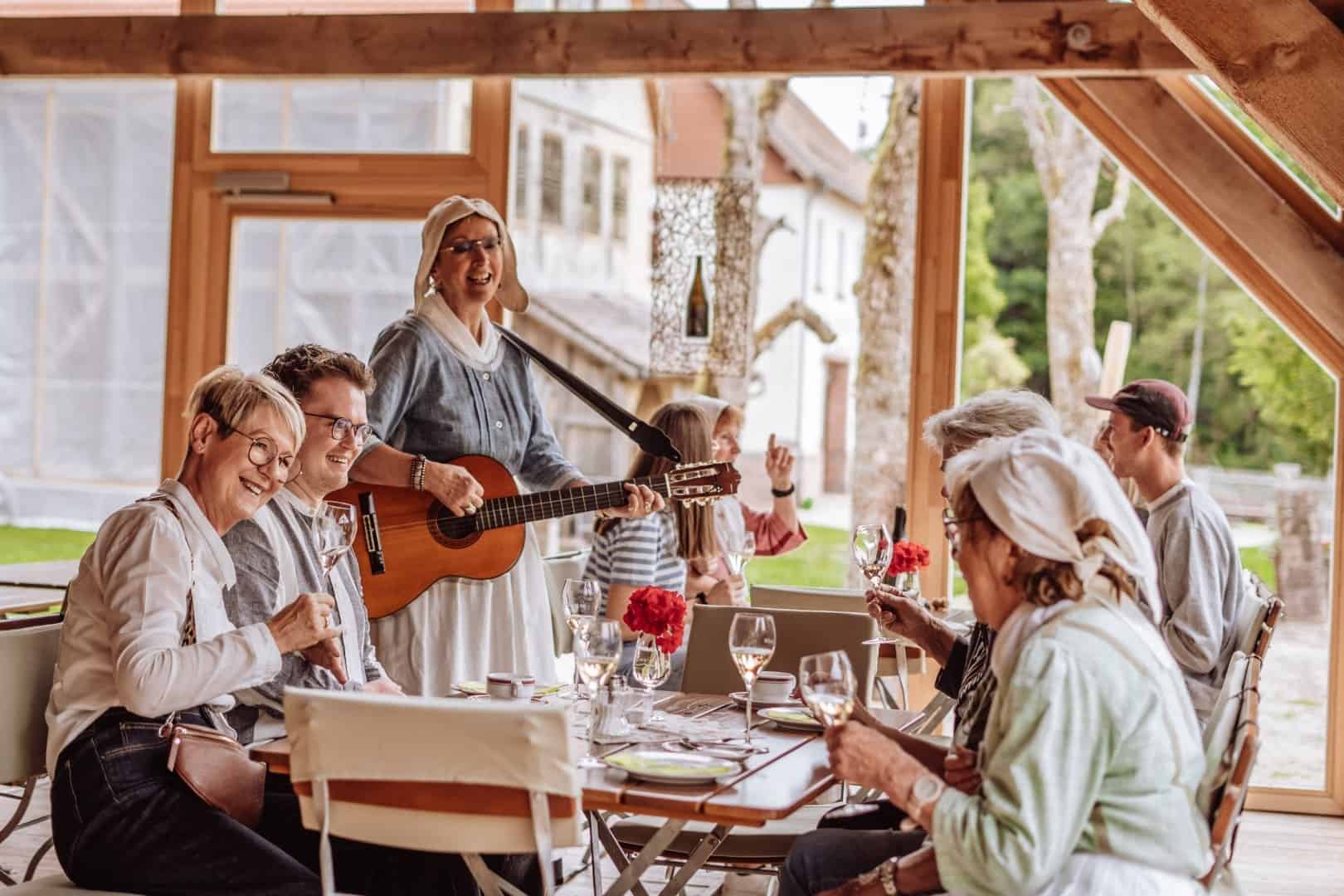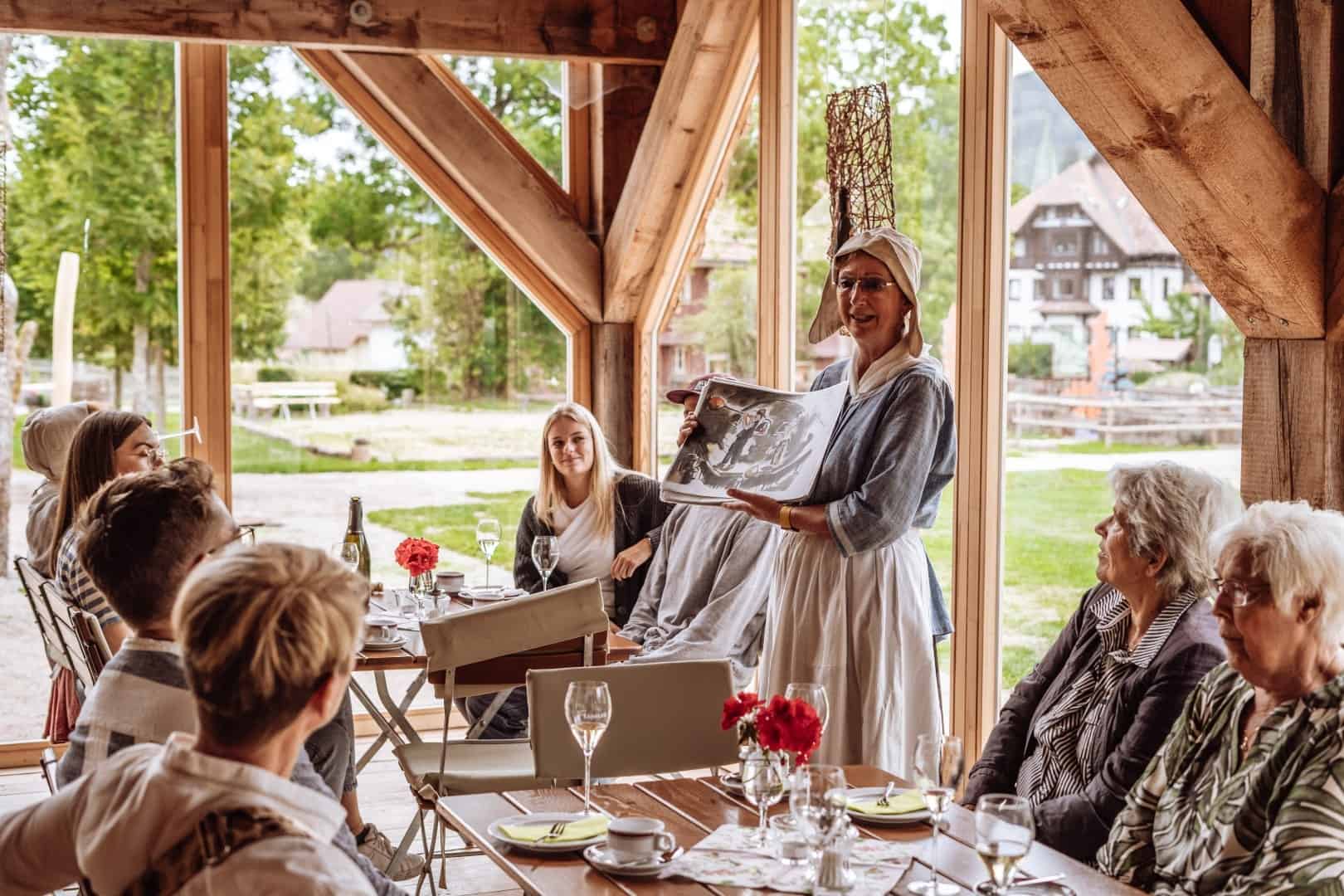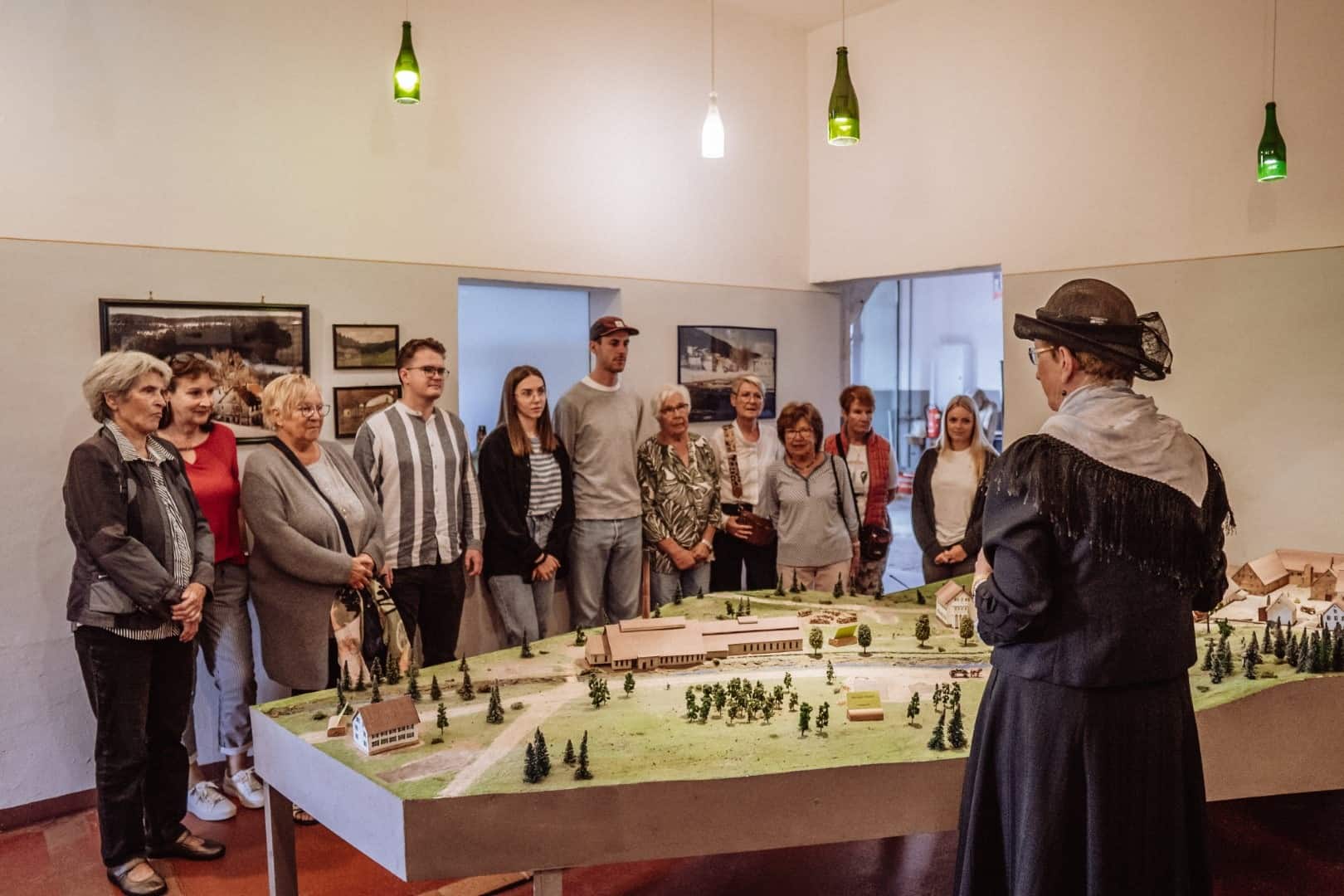

Between the 18th and 19th centuries, the most important and largest glassworks in the Black Forest was located in Baiersbronn-Buhlbach. What few people know today: Buhlbach's global success was based on the invention of the pressure-resistant champagne bottle, the so-called "Buhlbacher Schlegel". Two million of these bottles were mouth-blown every year and exported all over the world. The buildings that still exist today are the last historic glassworks in the Black Forest.
The Kulturpark Glashütte Buhlbach is now an impressive testimony to the history of glass production in the Black Forest and illustrates the development of the Buhlbach glassworks.
What awaits you in the glassworks?
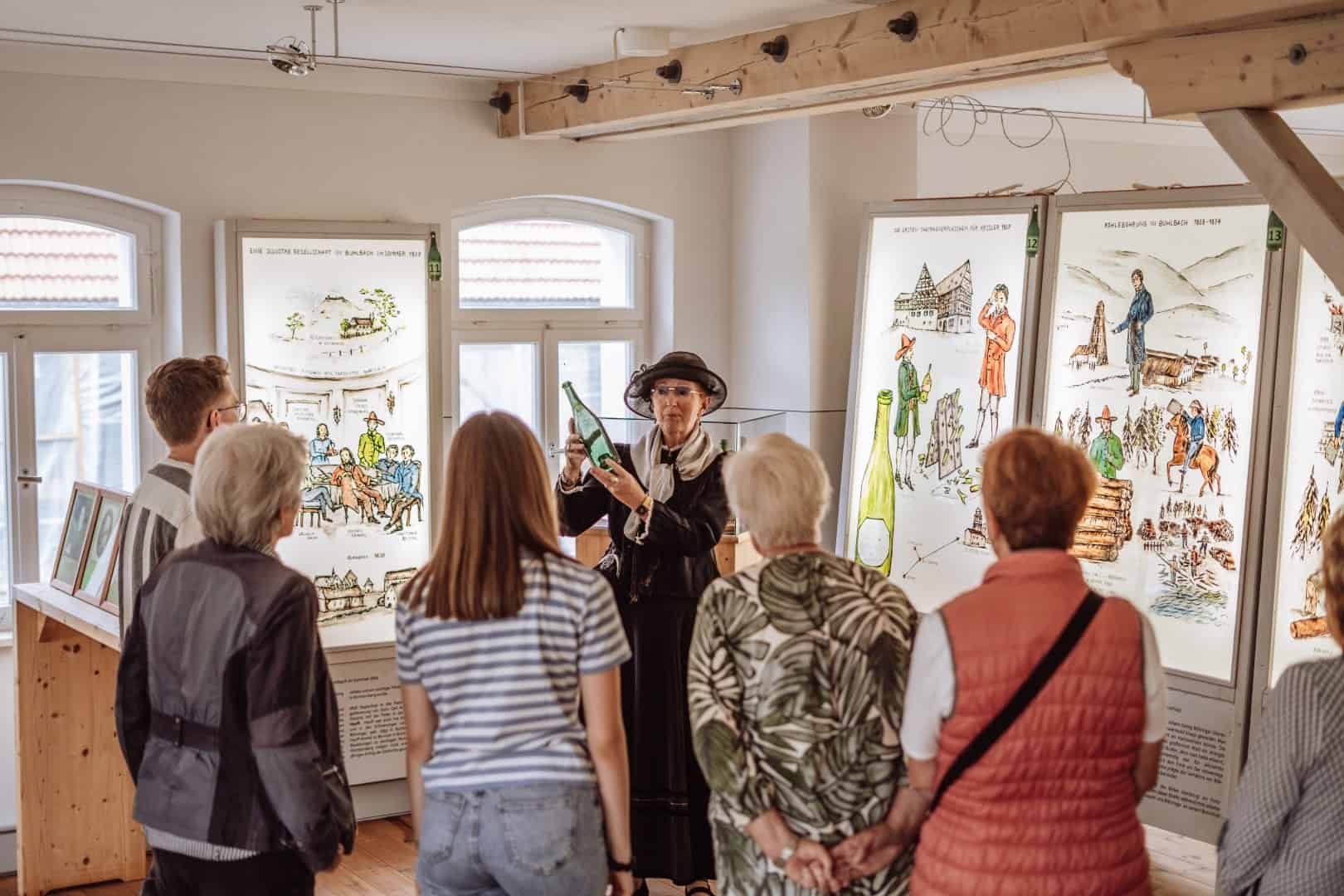
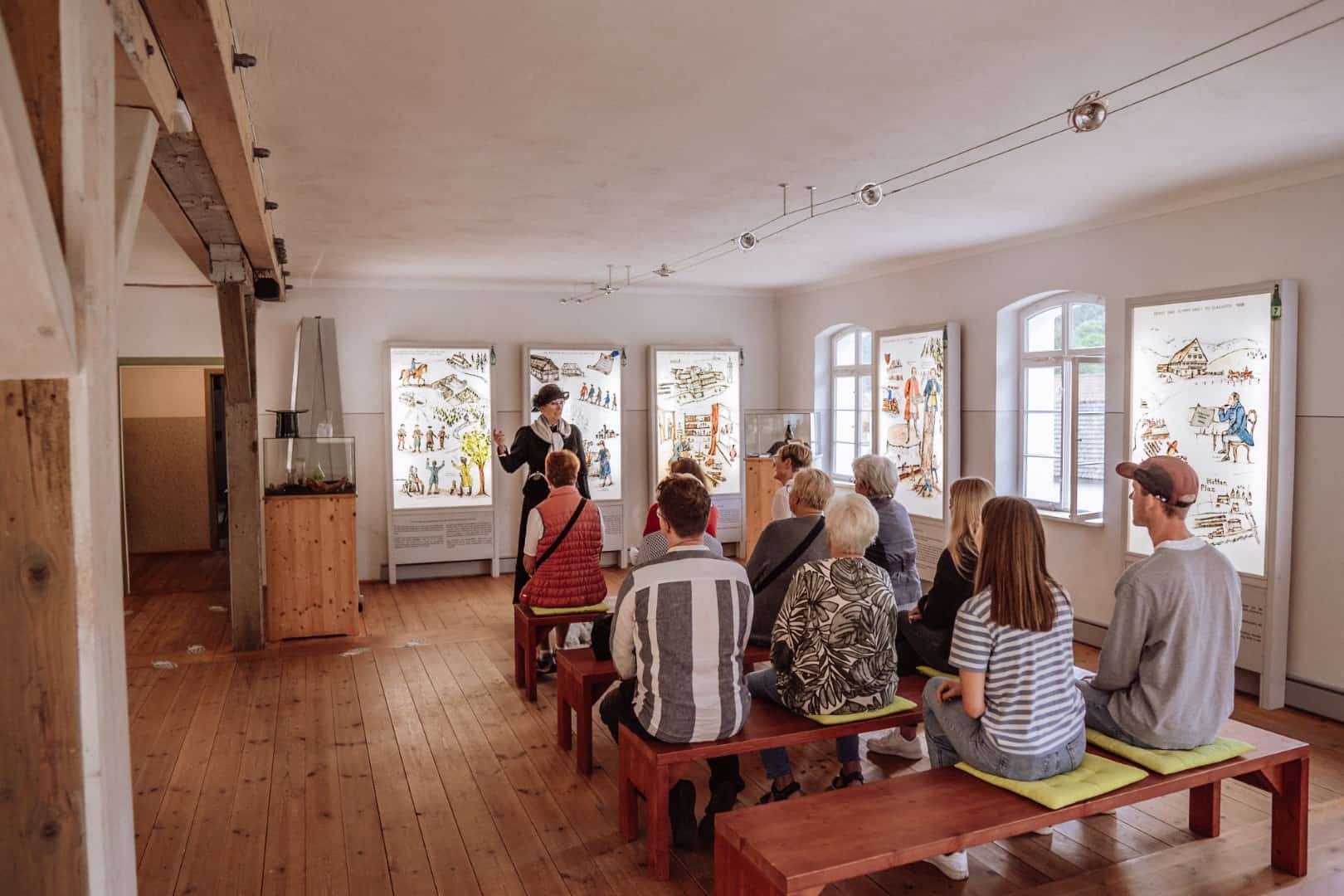
Several centuries ago, glass production was the first and largest branch of industry in the Black Forest. Today, the buildings of the Buhlbach glassworks are the last relics that bear witness to this era in the region. The remains of a mighty melting furnace and the last two historic glassworks buildings in the Black Forest can be visited. You can take part in a guided tour or inform yourself with the help of an acoustic tour. In the turbine house, 24 hand-painted glass panels tell the story of the "Buhlbacher Schlegel", which revolutionized sparkling wine and champagne production and was even delivered to the Tsar's court in St. Petersburg. In the stone grinding house you can visit historical workshops: a smithy, a stone mill, a grinding shop and on the upper floor the living world of the glassmakers with two apartments for workers. An acoustic guide with texts and sounds is also available here. In an impressive way, it becomes comprehensible how full of deprivation the life of our ancestors must have been.
Opening hours
The culture park is only open regularly in the summer months, detailed information can be found on the homepage.