My most beautiful discoveries in the heart of the Black Forest
Wolfach is a true gem in the central Black Forest! This charming town, first mentioned in documents in 1084, attracts around 151.000 overnight stays annually—and for good reason. Here, history is at your fingertips, while simultaneously enjoying the benefits of an officially recognized climatic health resort.
What makes Wolfach so special? The 600-year-old Fürstenberg Castle, along with the imposing town hall, dominates the townscape. An absolute highlight is the Dorotheenhütte (Dorotheen Hut) – the last active mouth-blown wood-blowing workshop in the entire Black Forest! Furthermore, Wolfach was the center of Kinzig river rafting for centuries, a tradition that is still alive today.
The town covers an area of 67,98 km² and is home to approximately 5571 residents. Together with the districts of Kinzigtal and Kirnbach, Wolfach proudly bears the title of "recreational resort."
Come with me on a discovery tour! I'll show you the most beautiful corners of the historic old town, share my favorite sights, and give you practical tips for accommodations and excursions. Wolfach truly surprised me – and I'm sure you'll be just as thrilled.
Discover Wolfach: Old Town, Location and First Impressions
At the confluence of the Wolf and Kinzig rivers lies Wolfach – a true gem in the central Black Forest. Its strategically favorable location made the town an important trading center early on.
The location in the Kinzig Valley and its significance
The urban area extends from 250 to a remarkable 880 meters above sea level and offers a fascinating mix of valley and mountain landscapes. The city center is clearly divided into areas on the left and right banks of the Kinzig River. The two districts are connected by the "Gassensteg" (Gassen Bridge) for pedestrians and the "Stadtbrücke" (City Bridge) for cars.
This geographical division significantly shaped Wolfach's development and is still evident in the cityscape today. Its location on the waterways, in particular, helped the city gain economic importance – Wolfach quickly developed into a center of Kinzig river rafting. Rafting was an important industry for centuries, which has had a lasting impact on the character of the city.
A walk through Wolfach's old town
The tour typically starts at the "Lower Gate," a relic of the once mighty city fortifications. This historic city gate, dating back to 1200 and built in the pre-Staufen style, forms the entrance to the spacious main street.
This street, which has regained its original function as a market street since the construction of the bypass, is home to numerous shops and inviting outdoor cafés. Particularly striking is the imposing town hall in the middle of the main street – a real eye-catcher with its impressive sandstone facade and frescoes by local artist Eduard Trautwein.
At the end of the main street near the Kinzig Bridge, the Upper Gate once stood, but it was destroyed in a fire in 1799. After crossing the bridge, you reach the so-called "Vorstadt" (suburb) on the right bank of the Kinzig, at the edge of which stands the late Gothic parish church of St. Laurentius.
The official circular route explores the most important historical sites in a walk lasting approximately 1,5 hours. It begins on the market square in front of the town hall and leads over the town bridge, the spa gardens, and the raftsmen's park to the castle courtyard.
The historic cityscape and its special features
Despite several major fires—the last of which occurred in 1892—the original town layout, with its winding streets and alleys, has been remarkably well preserved. Today's cityscape is primarily dominated by two notable buildings: Fürstenberg Palace and the town hall.
The mighty castle, built between 1671 and 1681 by the Lords of Fürstenberg, is impressive at 110 meters in length. It is considered one of the largest castles in Central Baden and today houses not only district and state authorities, but also the castle chapel and the rafting and local history museum.
Also notable is the medieval town layout, with its transverse ribbed structure on the left bank of the Kinzig River, and its wide market street (today Hauptstraße). This clear structure testifies to the early market rights, which were of great importance for Wolfach's development.
Stately town houses and historic administrative buildings from the 16th to 18th centuries line the main street, giving Wolfach its distinctive character. Each of these buildings tells its own story.
By the way, the local history museum in the castle houses a detailed model of the once fortified medieval town – which gives a good impression of the historical significance of this charming place in the heart of the Black Forest.
Sights in Wolfach: What you must see
Here are five attractions in Wolfach you absolutely shouldn't miss. Each tells its own story and shows why this Black Forest town is so special.
Fürstenberg Castle and Castle Chapel
The Fürstenberg Castle Impressive even from afar with its 110-meter-long facade, it is one of the largest palaces in Central Baden. Landgrave Maximilian Franz von Fürstenberg-Stühlingen had the four-winged complex built between 1671 and 1681 with a trapezoidal floor plan. However, the original plans for a residential palace were never implemented after the builder's early death.
Today, the castle houses various government offices: the tax office, the district court, the forestry administration, and a police station. The castle hall in the right wing is used for events, and the north wing houses the municipal museum.
The chapel is a true gem! Its origins date back 700 years to the first construction of the castle. This pilgrimage church dedicated to the "Sorrowful Mother" received its present form during a major reconstruction between 1670 and 1681. In addition to the 14th-century image of the Virgin Mary, you'll find valuable altarpieces and votive paintings. Particularly noteworthy is the painting "Christ in the Grave" from 1788 – created by Johann Baptist Seele, then only 14 years old and later court painter to the King of Württemberg.
Parish Church of St. Laurentius
The Catholic Parish Church of St. Laurentius It acquired its current form during the expansion in 1939/40. The choir, the south façade, the steeple with its gable roof, and two portals remain from the old church, dating from the 14th and 15th centuries. In the old choir, you will discover remnants of 14th-century frescoes and a late Gothic reticulated vault with original paintings.
Art lovers will find late Gothic and Baroque works inside: a Crucifixion group in the side chapel (ca. 1450), a Madonna of the Rosary from the mid-17th century, and a statue of Saint Joseph. On the left side of the hand-carved high altar by F. Marmon (1941) stands the figure of the church's patron saint, Saint Lawrence, with a grill as a symbolic attribute.
Dorotheenhütte – Experience glass art live
The Dorotheenhutte is truly something special – the last active mouth-blown glassworks in the entire Black Forest! Founded in 1947 by two Hamburg merchants, you can experience firsthand how quartz sand is turned into liquid glass at 1400° Celsius.
The adjacent Glass Museum takes you on a 2000-year journey through glass history. You'll find:
Glassmaking tools and old glass molds
Parts of disused steel furnaces
An impressive collection of historic Christmas tree decorations
Exhibits from modern times on the current use of glass
The hands-on activities are especially popular: Under supervision, you can blow your own glass lucky ball, engrave a glass, or paint a hand-blown Christmas bauble. The year-round "Christmas Village" with around 50 hand-blown tree decorations creates a festive atmosphere even in the height of summer.
Raftsmen and Local History Museum
On the ground floor of the north wing of the castle you will find the Raftsmen and Local History Museum – one of the oldest museums in the region, opened in 1937. The rooms have been painstakingly restored to their original condition during the time the castle was built.
A showpiece is the detailed town model from 1560. The Kinzig River rafting is housed in a separate department in the former castle kitchen. This traditional trade, once a privilege of the Wolfach residents, is presented in detail – from lumbering to the rafting itself. A film depicts the hard work of the raftsmen, whose profession was rendered obsolete 100 years ago by the railway. Incidentally, rafting was recognized by UNESCO as an "Intangible Cultural Heritage of Humanity" in 2022.
Kurgarten Wolfach – green oasis in the center
The Kurgarten lies a small green oasis between the Catholic town church and Funkenbadstraße. A healing spring once bubbled here, used for spa treatments as early as the late Middle Ages. Unfortunately, due to construction work, the spring has dried up, and attempts to refill it have failed.
Nevertheless, the spa gardens still invite you to linger today – a welcome break during your city tour through Wolfach.
Tradition and customs: Wolfach's cultural heart
Wolfach lives its traditions! Behind its historic facades, a rich cultural life pulsates, cultivated for centuries. Colorful parades, unique traditional costumes, and ancient crafts – this is where the true heart of the Black Forest beats.
The Swabian-Alemannic carnival
The Wolfach Carnival is impressive! The city is one of the most traditional strongholds of Swabian-Alemannic carnivalThe diversity is particularly extraordinary: no fewer than twelve parades take place during the carnival days. The "Fasnetusrufe" (call of the Fasnets) on the Wednesday before Ash Wednesday at 19 p.m. opens the street carnival and kicks off the "almost seven-day festival."
The absolute highlight is the "Wohlauf" (Welcome) on "Schellenmöntig" (Shrove Monday). Even before sunrise at 5:30 a.m., hundreds of white-clad fools gather in front of the castle gate. The noise is hellish – horns, whistles, and bells create a deafening roar! The Wohlaufsänger (welcome singer) is pulled through the town on a bed and sings his traditional song at twelve stations: "Wohlauf! Wohlauf! / You fools, hear, hear, and know: / The fool's day has come."
The "Nose Procession" on Shrove Tuesday is unique – an all-male parade. Wearing original nose-pulling costumes, inside-out jackets, and playing noise instruments, they march in single file through every nook and cranny of the city.
The Bollenhut from Kirnbach
The famous Bollenhut is the Black Forest symbol par excellence! Originally, however, it was only widespread in a small area: the three neighboring Black Forest villages of Gutach, Kirnbach (now part of Wolfach), and Hornberg-Reichenbach. Since around 1800, it has been part of the traditional costume of Protestant women in this region.
The imposing hat can weigh up to 2 kilograms and is handcrafted by milliners. Attached to the whitewashed straw hat are 14 wool balls arranged in a cross, although only 11 of them are visible. The color of the balls indicates marital status: unmarried women wear red, married women black. Girls are allowed to wear the red wool ball hat for the first time at their confirmation.
In Kirnbach, the traditional Bollenhut costume can still be seen today at church celebrations such as confirmations and traditional weddings. Since September 2021, there has been a worthwhile traditional costume exhibition in Kirnbach's Old Town Hall.
Rafting as a historical craft
For over 600 years, rafting shaped Wolfach – it brought wealth, but also hardship and misery in difficult times. Rafting was one of the privileges of the town of Wolfach and its citizens. Wieden (twisted branches) the tree trunks were tied together and transported across the rivers to their destinations.
In 1894, the last raft sailed down the Kinzig River – the railway made timber transport faster and cheaper. In December 2022, rafting received a special honor: UNESCO declared it an Intangible Cultural Heritage of Humanity!
Since 1984, the “Wolfach Kinzig rafters" to revive the old tradition. What began for the city's 900th anniversary is now a permanent cultural enrichment with regular performances and the popular "Floßhafenfest."
Museums and events related to traditions
You can experience local customs up close all year round in Wolfach. The Raftsmen's and Local History Museum in the castle displays numerous memorabilia from the lost era of rafting.
The "Kultur im Schloss Wolfach eV" association brings life to the castle with concerts, lectures, readings, theater performances, festivals, and markets. Annually changing special exhibitions offer ever-changing cultural insights.
You can experience the famous Bollenhut costume in all its glory at the traditional costume exhibition in the Old Town Hall in Kirnbach. Here, the diverse range is on display – from the red and black Bollenhut to the wedding dress and mourning dress.
You can still experience these traditions firsthand at numerous celebrations today. The hospitality and joie de vivre of the Wolfach residents are particularly evident at these convivial events, where culture and traditions are given top priority.
Staying in Wolfach: Tips for hotels and holiday apartments
After a day full of exploration, you need a comfortable place to stay. The selection in Wolfach is truly impressive – from traditional Black Forest inns to modern wellness hotels, you'll find it all.
Hotel in Wolfach: Recommendations for every taste
The Bollenhuthotel Kirnbacher Hof in the idyllic Kirnbachtal valley particularly impressed me. With a rating of 9,0 ("Wonderful"), it serves delicious Baden specialties and is one of the most popular accommodations in the region.
If you like it central, you will find Hotel-Restaurant Krone in the heart of the city center. Starting at around €124 per night, you are perfectly positioned for city strolls and restaurant visits. Kurgarten Hotel scores points with its indoor pool and wellness area – perfect after a long hike.
Holiday apartment in Wolfach: For families and individualists
Looking for more space? Wolfach offers over 40 different holiday apartments and houses. The Röcklehof with spacious apartments starting from €52 per night. Foot farm costs from 105 € per night and offers real country life.
The Holiday apartment Morgensonne with a rating of 9,2 is available from around €61. An insider tip for nature lovers: the Äckerhof with its “pod house” – there you can spend the night practically in the middle of nature.
Special accommodations in St. Roman and Kirnbach
The Nature Park Hotel Adler in St. Roman is truly something special. This 4-star superior boutique resort is nestled in an idyllic high valley. The 1.800 square meter wellness area with a swimming pool, saunas, and spa treatments leaves nothing to be desired. Room rates start at approximately €127 per night.
Families with children feel at home on the Josenhof in the Kirnbach valley A pool, playground, and trampoline right on the farm provide "endless freedom"—at least from a child's perspective.
Gastronomy tips for connoisseurs
Wolfach's gastronomy combines regional traditions with international influences. Nature park hosts offer at least six regional dishes and a regional menu throughout the year – with ingredients sourced directly from the Black Forest nature parks.
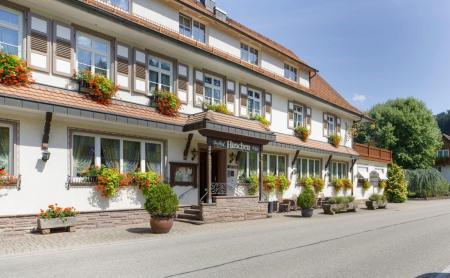
Im Hotel Gasthof Hecht You can enjoy French cuisine with imaginative local dishes. Raftsmen's Café with its large beer garden invites you to relax after a stroll through the city.
Nature and exercise: hiking, cycling and more
A true paradise awaits all those who enjoy being active around Wolfach. Between rolling hills, dense Black Forests, and picturesque river valleys, there are countless opportunities to explore the region.
Hiking around St. Roman
St. Roman is the perfect starting point for beautiful hikes. Panorama Trail Sankt Roman The trail leads from the Adler Nature Park Hotel over the Teufelsstein to Kohlplatz and offers breathtaking views of the central Black Forest. At the Hohe Tanne (Hohe Tanne), you reach the highest point of the tour at 753 meters.
The route is well signposted: First, follow the Hansjakobweg (black hat) to Abrahamsbühl, then turn left toward Hohe Tanne. From there, the path marked with the blue diamond continues to Kohlplatz, where a particularly beautiful view awaits. Via Jehlebasches Höhe and Schlegelsbühl, the trail returns to the starting point. You can fortify yourself with a hearty Black Forest snack at the Benzenhof restaurant along the way.
Sturdy footwear is recommended, as some sections lead along natural paths.
Cycling along the Kinzig
The Kinzigtal Cycle Path is one of the most beautiful cycling routes in the Black Forest. It runs for a good 90 kilometers from Freudenstadt via Wolfach to Offenburg, almost always slightly downhill. The route is particularly family-friendly from Alpirsbach, as it runs exclusively on asphalt paths.
The cycle path is suitable for:
E-bikes and regular bikes
Families with child trailers
Wheelchair handbikes and therapy bikes
Numerous bistros, cafés, and restaurants along the route invite you to take a break. Several charging stations for e-bikers are available in Wolfach.
Every year in spring, a special family cycling adventure day takes place. Lossburg From there to Offenburg there are a variety of offers with music, entertainment and attractions directly along the route.
The Flößerpark and the Kinziganlagen
At the confluence of the Wolf and Kinzig rivers lies the idyllic Raftsmen's Park Wolfach – a small oasis far from the noise of traffic. Information panels provide insight into the history of rafting, while a small demonstration raft vividly demonstrates the technique of raft building.
Particularly interesting is the faithfully reconstructed wood-burning oven. This is where rafters once made their "wieden" (the wooden ropes used to tie tree trunks together). Every two years, you can experience a real raft on the Kinzig River here when the Wolfach Kinzig rafters celebrate their traditional rafting festival.
The Raftsmen's Café Its large beer garden (seats approximately 80) invites you to linger. The idyllic Flößerwiese (floating meadow) is especially popular with larger groups and cyclists and is an ideal venue for festivals and live events.
Viewpoints and nature experiences
Around Wolfach, spectacular viewpoints await with panoramic views over the Kinzig, Wolf, and Kirnbach valleys. SpitzfelsenLocated directly on the Westweg trail, it offers breathtaking views over Wolfach and the Kirnbach Valley, as well as towards Hausach. A cozy mountain hut invites you to rest.
The circular hike “Beautiful views around Wolfach” leads to numerous viewpoints. From the Wolfach train station, the route first leads through the city center, then takes the Westweg steeply uphill to the highest point of the tour, the Spitzfelsen (577 m). Other highlights include:
The ruins of Wolfach (“Schlössle”) with a view of the city center
The Hexentanzplatz (360 m) with its striking viewing point
The Dohlenbacher Höhe with beautiful views of the Wolf and Kinzig valleys
The premium route is particularly popular “Wolfach Castle View”, which leads to striking vantage points overlooking Wolfach Castle and the Kinzig and Wolf valleys. The route offers short, challenging climbs and fantastic views – a true highlight of the Black Forest for many hikers.
Excursion destinations around Wolfach: The Black Forest on your doorstep
Fantastic excursion destinations await right on your doorstep! From Wolfach, you can easily reach some of the Black Forest's most beautiful attractions.
Vogtsbauernhof open-air museum
The Black Forest open-air museum Vogtsbauernhof in Gutach is an absolute must! With approximately 230.000 visitors annually, it's one of Germany's most visited open-air museums. From March to November, you can experience firsthand how people lived and worked in the Black Forest up to 600 years ago.
Especially great for families: On Sundays and public holidays, there's an open workshop where children can get hands-on. A perfect day trip for the whole family!
Triberg waterfalls
The Triberg waterfalls are simply spectacular! With a drop of 163 meters and seven cascades, they are among Germany's highest waterfalls. Three different trails lead through the area: the Nature Trail, the Cultural Trail, and the Cascade Trail.
A special tip: The waterfalls are illuminated until 22 p.m. – a magical evening experience! It's also worth a visit in winter, when the waterfalls transform into a true winter wonderland with icicles and snow.
Haslach im Kinzigtal and Hornberg
Haslach in the Kinzigtal Its picturesque old town, full of baroque half-timbered houses, is a real treat. Within a radius of just 300 meters, you'll find almost 60 specialty shops, bistros, and restaurants – a truly exceptional destination!
Hornberg offers a very special view: From the historic Schlossberg with its castle ruins, you have a perfect view of the "largest living model railway" – Hornberg with its famous viaduct and the Black Forest Railway. Truly impressive!
Clara mine mineral dump in Oberwolfach
The Clara Mine in Oberwolfach is the last active mine in the Black Forest! With over 400 identified minerals, it's even considered the richest mine in the world. At the mineral dump in Wolfach-Kirnbach, you can search for rare treasures yourself. There's also gold panning for the little ones.
On four weekends a year, the large mineral deposits open their doors—a real highlight for collectors from all over Europe. Be sure to check the dates in advance!
Why Wolfach is a real insider tip in the Black Forest
Wolfach is truly one of those towns you only truly appreciate once you've been there. Everything here simply fits together: the historic old town with its imposing castle, the vibrant rafting tradition, and that relaxed Black Forest atmosphere.
What impressed me most? The diversity in such a small space. In the morning, you can stroll through the cozy alleys, in the afternoon explore the surrounding area on the Kinzig Valley bike path, and in the evening, round off the day with a regional snack. The Swabian-Alemannic carnival and the famous Bollenhut (a traditional German hat) from Kirnbach are just as much a part of the experience as the Dorotheenhütte (a glassmaker's hut), where you can watch the glassmaker at work.
I particularly like the fact that Wolfach isn't overcrowded. You can still experience authentic Black Forest life here without having to push through crowds of tourists. The hiking trails around town offer magnificent views, and the accommodations—from cozy inns to wellness hotels—leave nothing to be desired.
My tip: Plan at least two days for Wolfach. One day for the town itself and one for the surrounding area. This way, you can truly immerse yourself in this wonderful region. The hospitality of the Wolfach residents and the relaxed atmosphere will surely delight you as much as they did me.
By the way, anyone who has been here once is happy to return. This is evident from the many regulars who return to this charming Black Forest town year after year.
Questions and answers about Wolfach in the Black Forest
The Clara mine in Oberwolfach is the last active mine in the Black Forest.
With over 400 identified minerals, the Clara mine is considered the most mineral-rich mine in the world.
In Wolfach you can visit the historic old town with its impressive castle and learn about the lively tradition of rafting.
The Dorotheenhütte is a glassworks in Wolfach where visitors can watch the glassmakers at work.
Typical cultural traditions include the Swabian-Alemannic carnival and the famous Bollenhut from Kirnbach.
According to the text, you should plan at least two days for Wolfach – one day for the city itself and one for the surrounding area.
In and around Wolfach, you can stroll through cozy alleys, cycle along the Kinzig Valley cycle path, explore hiking trails with magnificent views, and round off the day with a regional snack.