The most famous long-distance hiking trail in the Black Forest: the Westweg
In 1900 the Black Forest Association created the Westweg as the first long-distance hiking trail.
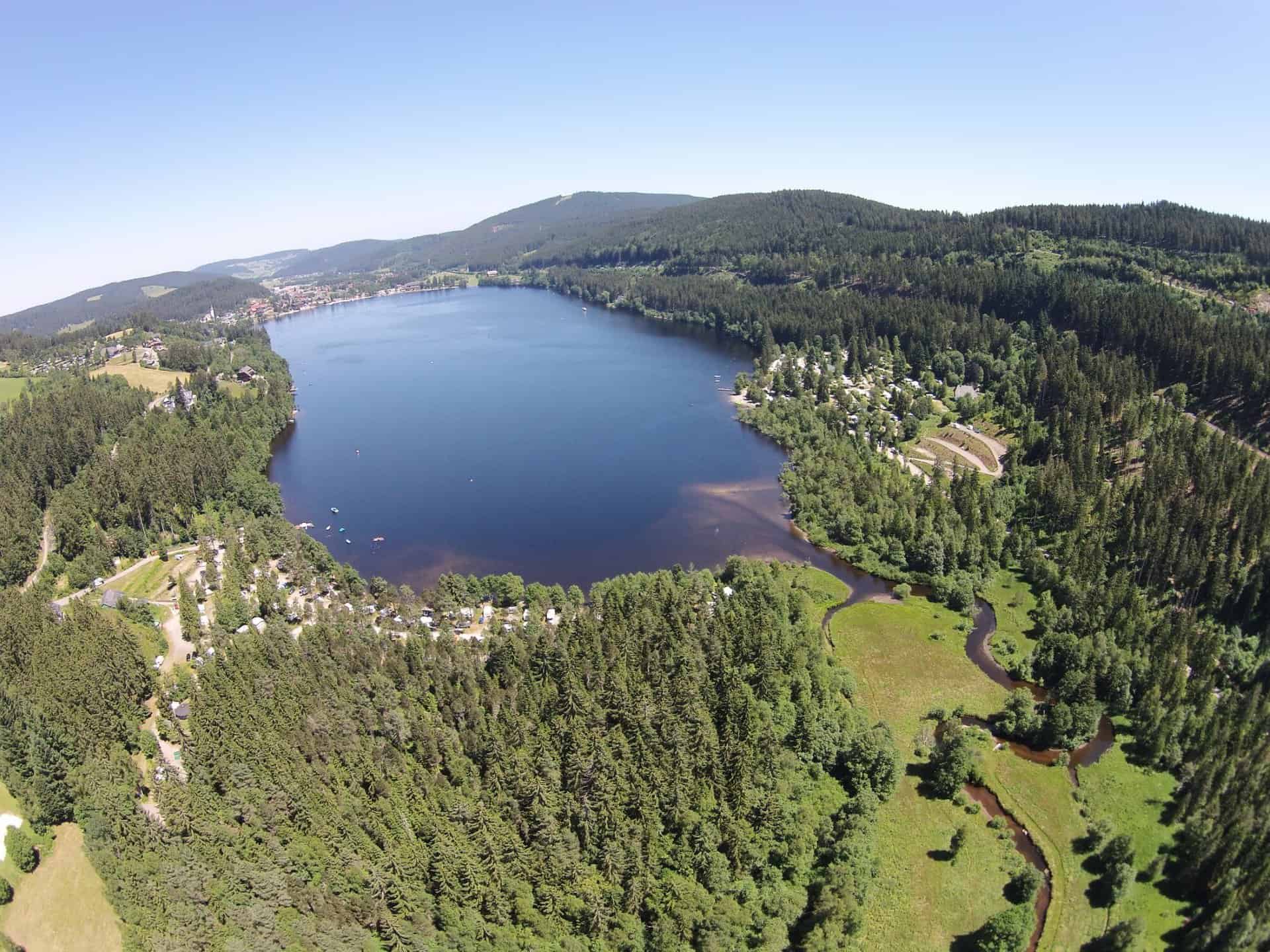
This 285-kilometer long-distance hiking trail leads through the beautiful Black Forest. The route begins in Pforzheim, runs through the Black Forest National Park in the northern Black Forest , and splits at Lake Titisee . The trail ends in Basel . In 2007, this quality trail was adapted to the needs of modern hikers and has since been considered one of the best long-distance hiking trails in Germany.
The popular Westweg trail is renowned for its challenging route. The hike leads through diverse natural landscapes, and the cultural landscape of the Black Forest also offers hikers impressive moments. The Westweg is easily recognizable by its red diamond marker. The trail follows the main ridge of the Black Forest , allowing you to admire the highest peaks, including the Feldberg and the Hornisgrinde . The Belchen and Blauen mountains offer breathtaking views of the snow-capped Alps. The Westweg is a well-maintained long-distance hiking trail, coordinated and kept clean by volunteer trail wardens from the Black Forest Association.


An overview of the stages of the Westweg trail
To optimize the hike and avoid overexertion, the tried and tested stage division with a stopover at the Harkhof in the Central Black Forest is recommended.
Stages 1 to 8: From Pforzheim to the fork in the road
- Stage 1: Pforzheim – Dobel
- Data: 25,0 km | approx. 7,0 hours | Ascent: 692 m | Descent: 249 m
- Characteristic: Comfortable forest, woodland and meadow paths for hiking.
- Highlights: Starting at the “Golden Gate” at Kupferhammer, ascent along the Enz river, Neuenbürg Castle with the fairy tale exhibition “The Cold Heart”, panoramic view from the Schwanner Warte lookout tower and the Felsenmeer (sea of rocks) at the Großer Volzemer Stein.
- Stage 2: Dobel – Forbach
- Data: 26,3 km | approx. 7,5 hours | Ascent: 547 m | Descent: 971 m
- Characteristic: A varied high plateau, followed by a steep, almost alpine descent into the Murg valley.
- Highlights: Information centre Kaltenbronn, boardwalk through the high moor at Hohlohsee, panoramic view from the Hohloh tower (988 m), pulpit at the Latschigfelsen and the historic covered wooden bridge over the Murg in Forbach.
- Stage 3: Forbach – Unterstmatt
- Data: 19,6 km | approx. 6,0 hours | Ascent: 1.079 m | Descent: 459 m
- Characteristic: Challenging ascent to the main ridge of the Northern Black Forest with stony paths.
- Highlights: Passing by the mighty Schwarzenbach dam, the tranquil Herrenwieser See below the steep cirque wall, the Friedrichsturm tower on the Badener Höhe (1.002 m) and the rugged Grinden landscape on the Hochkopf.
- Stage 4: Unterstmatt – Alexanderschanze
- Data: 28,3 km | approx. 8,5 hours | Ascent: 761 m | Descent: 690 m
- Characteristic: The highest stage of the Northern Black Forest is almost entirely above 1.000 m altitude through the National park Black Forest.
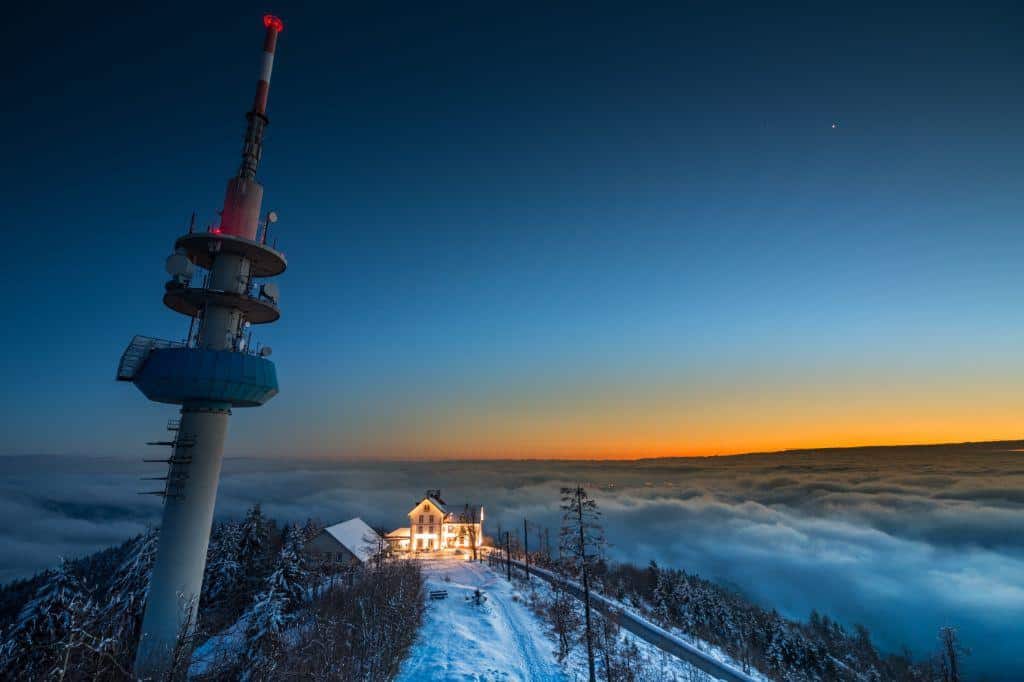
- Highlights: Hornisgrinde (1.163 m) with Bismarck and Hornisgrinde Tower, the legendary Mummelsee, Ruhestein National Park Centre, Schliffkopf, adventure trail Lothar path and historical ski jump facilities.
- Stage 5: Alexanderschanze – Hark (Harkhof)
- Data: 17,1 km | approx. 5,0 hours | Ascent: 252 m | Descent: 522 m
- Characteristic: Pleasant, quiet forest passage on the ridge.
- Highlights: Deep views into the Rench valley from the Bauernkopf, a detour to the mystical Glaswaldsee in its deep cirque, the Klagstein viewpoint and a cozy stop at the secluded Harkhof.
- Stage 6: Hark (Harkhof) – Hausach
- Data: 15,5 km | approx. 6,5 hours | Ascent: 358 m | Descent: 826 m
- Characteristic: Ridge hike between Wolftal and Einbachtal with a steep final descent into the Kinzigtal.
- Highlights: A detour to the observation tower on the Brandenkopf (945 m), a rest at the Hohenlochenhütte, fantastic views down from the Spitzfelsen to Hausach and passing the Husen castle ruins.
- Stage 7: Hausach – Wilhelmshöhe (Schonach)
- Data: 21,3 km | approx. 7,5 hours | Ascent: 1.214 m | Descent: 468 m
- Characteristic: A physically demanding stage in the central Black Forest with a continuous steep climb.
- Highlights: Steep ascent to the Farrenkopf (Hasemann-Hütte), historic ramparts at the Prechtaler Schanze, imposing rock formation at the Huberfelsen and the striking granite block Karlstein (964 m).
- Stage 8: Wilhelmshöhe – Kalte Herberge
- Data: 22,4 km | approx. 6,5 hours | Ascent: 479 m | Descent: 426 m
- Characteristic: Relaxing hike on the European watershed between the Rhine and the Danube.
- Highlights: Idyllic boardwalk through the Blindensee nature reserve, historic St. Martin's Chapel with the Breg spring (main source river of the Danube), enormous rock formations at Günterfelsen and the observation tower on the Brend (1.149 m).
- Stage 9: Kalte Herberge – Titisee (path split)
- Data: West route to hind tenders: 26,1 km (approx. 7,5 hours) | Eastern route to Bärental: 26,7 km (approx. 7,5 hours)
- Characteristic: A scenically magnificent translator's stage into the Black Forest highlands.
- Highlights: Türkenlouis-Schanze at the Hohlen Graben, panoramic view from the Weißtannenhöhe (1.190 m) and reaching the famous Titisee, at whose Kurhaus the Westweg officially splits into the west and east routes.
The western route: Over the highest Black Forest peaks
- Stage 10 (West): Hinterzarten – Feldberg – Wiedener Eck
- Data: 26,6 km | approx. 8,5 hours | Ascent: 765 m | Descent: 628 m
- Characteristic: The royal main stage across the alpine roof of the Black Forest.
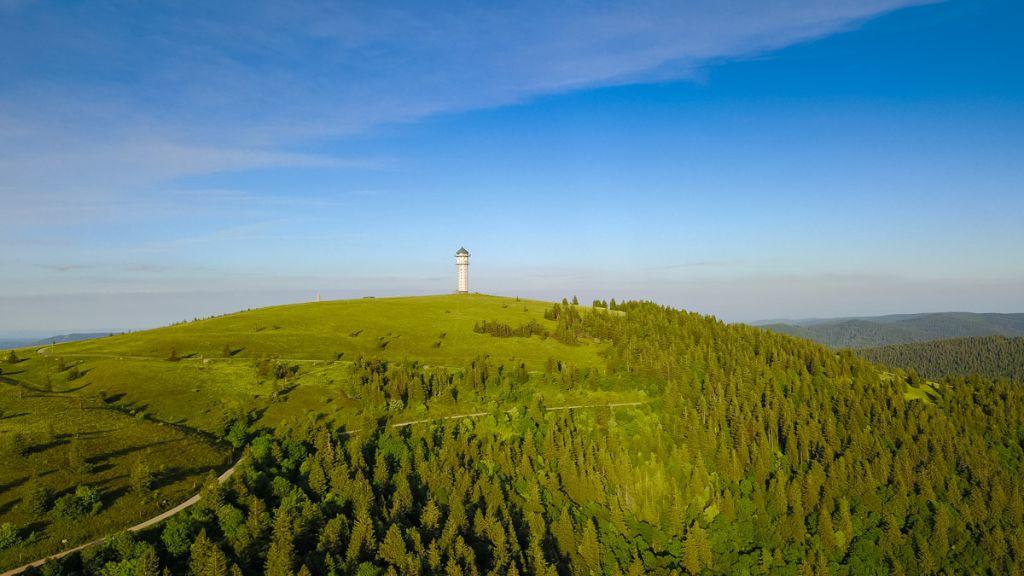
- Highlights: Romantic Mathisleweiher, deep view into the dark Feldsee cirque lake, climbing the Feldberg summit (1.493 m – highest point of all German low mountain ranges), ridge hike over the Stübenwasen (1.386 m) with the longest tree lounger in the world and the Notschrei pass.
- Stage 11 (West): Wiedener Eck – Belchen – Kandern
- Data: 32,2 km | approx. 8,0 hours | Ascent: 872 m | Descent: 1.563 m
- Characteristic: A very long, challenging mountain tour over two striking peaks down into the mild Markgräflerland region. (Tip: If needed, the trip can easily be split into two days with an overnight stay in Neuenweg).
- Highlights: The Belchen (1.414 m) with its spectacular 360-degree Alpine panorama, scenic descent via the Hohe Kelch, climbing the iron observation tower on the High blues (1.165 m) and the historic Sausenburg castle ruins.
- Stage 12 (West): Kandern – Basel
- Data: 26,2 km | approx. 7,5 hours | Ascent: 459 m | Descent: 552 m
- Characteristic: The final leg takes you through vineyards, gentle beech forests and river meadows.
- Highlights: Rock passages in the wildly romantic Wolfsschlucht gorge, the mighty Rötteln castle ruins high above Lörrach, Panoramic view from the Tüllinger Höhe, Lange Erlen animal park and the finish line at the Badischer Bahnhof in Basel.
The eastern route: Via the Herzogenhorn and the Dinkelberg
- Stage 10 (East): Feldberg-Bärental – Weißenbachsattel
- Data: 24,8 km | approx. 7,5 hours | Ascent: 1.029 m | Descent: 915 m
- Characteristic: A physically demanding summit stage over four magnificent peaks.
- Highlights: The famous two-lake view (view of Titisee and Schluchsee (at the same time), ascent to Herzogenhorn (1.415 m – second highest mountain in the Black Forest), the Blössling viewpoint (1.310 m), the edge of the glacial Präger glacier basin and the Hochkopf tower (1.263 m).
- Stage 11 (East): Weißenbachsattel – Schweigmatt
- Data: 18,2 km | approx. 5,0 hours | Ascent: 393 m | Descent: 751 m
- Characteristic: A gentler transition in the landscape from the southern Black Forest peaks towards the Dinkelberg.
- Highlights: Mountain meadows near Dead moss, observation tower on the Hohe Möhr (983 m) with first distant view of the Swiss Alps and the Dinkelberg. (Optional side trip to the Erdmannshöhle stalactite cave in Hasel).
- Stage 12 (East): Schweigmatt – Oberminseln
- Data: 19,9 km | approx. 5,5 hours | Ascent: 189 m | Descent: 542 m
- Characteristic: A pleasant flat stage across the karst ridge of the Dinkelberg.
- Highlights: Geological features such as karst dolines, the irregularly occurring Eichener See lake and the observation tower on the Hohe Flum (536 m).
- Stage 13 (East): Oberminseln – Basel
- Data: 24,2 km | approx. 7,5 hours | Ascent: 466 m | Descent: 586 m
- Characteristic: A varied final stage with rocky gorges and the Upper Rhine Valley.
- Highlights: Panoramic view from the Eigenturm tower, path through the wildly romantic Ruschbach valley, the Grenzacher Buchswald forest on the steep slope, deep view from the Grenzacher Hornfelsen rock formation down to the Rhine and finish line at the Badischer Bahnhof in Basel.


Nature of the long-distance hiking trail
The nature of the Westweg is varied and offers hikers a variety of challenges. The route leads along well-marked paths that include both paved routes and narrow natural paths.
At higher altitudes, such as the Hornisgrinde or the Feldberg, you will come across rocky and sometimes steep passages that require surefootedness. The hills and valleys of the Black Forest provide varying elevation profiles that include both ascents and gentle descents. Some sections can be slippery, especially after rain, which is why waterproof hiking boots with a good profile are recommended.
The Westweg offers a successful mix of relaxed stages and more demanding challenges, which are perfect for hikers with moderate fitness.
Food and drinking water: The right strategy for on the go
The Westweg trail requires a clever food strategy, as the infrastructure changes noticeably over the course of the nearly 300 kilometers.
Food and refreshments: In the Northern Black Forest (especially between Forbach and Hausach), some long stages offer few opportunities to stop for refreshments directly along the trail. Here, you absolutely must carry one or two days' worth of energy-rich food (nuts, trekking meals, muesli bars) in your backpack. From Hausach onwards and in the Southern Black Forest, the network of mountain inns, snack bars, and managed huts run by the Black Forest Association becomes significantly denser. A hearty farmer's snack with Black Forest ham is often the best reward of the day. Plan your shopping in advance: Not every town along the route has a supermarket, and the small village shops are closed on Sundays.
Drinking water management: On many stages of the trail, you'll be hiking along mountain ridges where water can be scarce. Start each morning with at least 2 to 3 liters of water in your backpack. Along the route, you'll regularly pass springs and village wells. However, please note: These are often marked with a "No Drinking Water" sign, as the local communities don't regularly test the water quality chemically. To avoid stomach problems, a lightweight, compact outdoor water filter (e.g., a hollow fiber filter) or water purification tablets are essential items for your Westweg hike.
Helpful information for the hiker

If you haven't done a hike like this before, you should be prepared for a few things: you definitely need high-quality trekking equipment, good physical condition, and plenty of motivation to tackle something like this effectively. The trip preparations are also a lot of fun, and the internet now offers great opportunities to read about other people's experiences – this way you start better prepared and ultimately increase your anticipation. However, the Westweg trail in particular has some special features that make hiking it even more appealing :
- The Westweg trail has an eastern and a western variant. While the routes are predetermined, those feeling more adventurous can combine the two by hiking two day stages on one route, then crossing over to the other variant and continuing on the Feldberg. From there, one can then take the train to... Freiburg - and be driven back to the starting point.
- In summer it is also relatively warm and comfortable at night, so that you don't have to burden yourself with heavy luggage. One Summer or hut sleeping bag or a thin fleece blanket in your backpack is absolutely sufficient to get through the nights without freezing.
- There are also opportunities to spend the night in shelters along the route. Booking overnight stays in advance makes the trip a lot more relaxed and is even more fun. Unfortunately, there is currently no possibility to spend the night at the Sausenburg, this was something very special for hikers at the time - but it is still worth a visit today.
- The Westweg already has a Over 125 years of history.
Overnight stay on the Westweg
There are numerous guesthouses, hotels, and youth hostels along the popular long-distance hiking trail. We have dedicated a special section to this topic on our page " Accommodations on the Westweg ".
The exact Westweg packing list: Every gram counts
Anyone who runs between 15 and 35 kilometers daily and climbs over 8.000 meters in elevation needs to pack efficiently. Ideally, the base weight of your backpack (without water and food) should be between 6 and 8 kilograms. A volume of 40 to 50 liters is optimal for the backpack itself.
The right footwear: Low-cut shoes are insufficient for the sometimes rocky and root-covered trails on the Feldberg or the Hornisgrinde . Ankle-high trekking boots of category B or B/C are recommended, ideally with a Gore-Tex membrane, as the weather on the ridges can change rapidly.
Clothing (layering principle):
- 2x hiking socks (e.g. made of merino wool to minimize odor and blisters)
- 2x breathable functional shirts (Merino)
- 1x Zip-off hiking trousers
- 1x warm insulating layer (fleece jacket or light down jacket for cool evenings)
- 1x high-quality hardshell rain jacket and rain pants
Equipment and accommodation:
- Trekking poles: They greatly relieve the strain on knees and joints during the constant ascents and descents.
- Sleeping bag liner (made of silk or microfiber): Mandatory if you are sleeping in staffed mountain huts or youth hostels.
- Lightweight outdoor water filter.
Hygiene and first aid:
- Travel medicine kit: Plenty of blister plasters (Compeed), tape, tick tweezers, disinfectant, painkillers (ibuprofen) and an emergency blanket.
- Microfiber towel (quick-drying and extremely lightweight).
- Sun protection: Sunscreen (SPF 50), sunglasses and a cap. On the ridges and peaks, you'll be hiking for hours without the protective shade of trees.
Technology and documents:
- Power bank (at least 10.000 mAh) for GPS navigation via smartphone.
- Headlamp for late hours or unlit cabins.
- Bring sufficient cash, as many mountain stations and smaller guesthouses do not accept card payments.
- Identity card (for crossing the border into Basel, Switzerland).
Arrival and departure: Logistics for your Westweg adventure
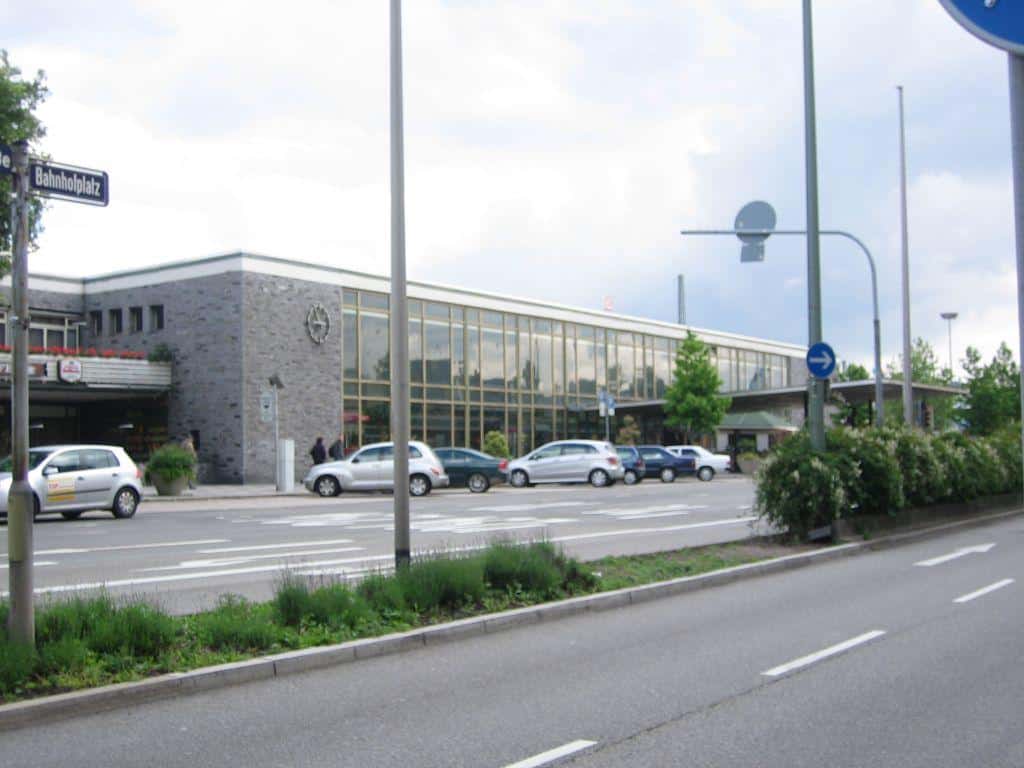
Planning the logistics is crucial for a long-distance hike of approximately 285 kilometers. The official starting point in Pforzheim (often called the Gold City) is excellently connected to the ICE and IC train network of Deutsche Bahn. Those arriving by car will find several paid long-term parking options in Pforzheim for the duration of the hike.
The Westweg trail's endpoint, the Badischer Bahnhof train station in Basel, offers excellent return travel options. From here, direct trains regularly run through the Rhine Valley back to Freiburg, Karlsruhe, or Pforzheim. Tip for hikers tackling the trail in stages: Those who hike the Westweg in stages rather than all at once can benefit from the KONUS guest card. Guests staying overnight in participating Black Forest communities can use buses and trains free of charge for transfers between stage locations.
Questions and Answers about the Westweg
Can I hike the Westweg alone?
Yes, the Westweg is well marked and suitable for solo hikers, but it is important to take safety precautions and inform someone of your route and plans.
Is there public transport along the Westweg?
Yes, many of the start and end points of the stages can be reached by public transport. This makes planning easier if you only want to hike individual stages.
Do I need special equipment for the Westweg?
In addition to the basic equipment such as hiking boots and a backpack, you should make sure you have weatherproof clothing, enough water and provisions, as well as a hiking map or a GPS device.
How challenging is the Westweg?
The Westweg is classified as moderately difficult. There are some challenging climbs and longer stages, but with a good level of fitness and the right equipment, it is easily doable for experienced hikers.
Are dogs allowed on the Westweg?
Yes, dogs are allowed on the Westweg, but you should check in advance whether the accommodation you have booked accepts pets.
Which season is best for the Westweg?
The best time to hike the Westweg is from May to October. In spring and autumn you can enjoy pleasant temperatures and beautiful nature, while it can be warmer in midsummer.
Can I walk the Westweg without making overnight reservations?
It is strongly recommended to book accommodation in advance, especially during peak season, as many guesthouses, huts and trekking sites can quickly become fully booked.
How long does the hike on the Westweg take?
The hike along the entire Westweg takes about 12 to 14 days, depending on your pace and breaks. However, it is possible to hike individual stages and adjust the duration accordingly.
Further information can be found at www.westweg.de